a environmental
hero's story
Humans have lost control, exploiting Earth’s natural resources beyond sustainable limits and damaging the environment with pollution and toxic materials. Temperatures are rising, sea levels increasing, and the scarcity of potable water is already real in some partes of the planet.
We are exhausting and damaging our home. It is everyone’s responsibility to take action to reverse, or at least halt, this trajectory. Small gestures such saving water and recycling, are already significant contributions.
Thousands of environmental projects have been established to find effective solutions waste. Society is producing far more waste than the system can cope with.
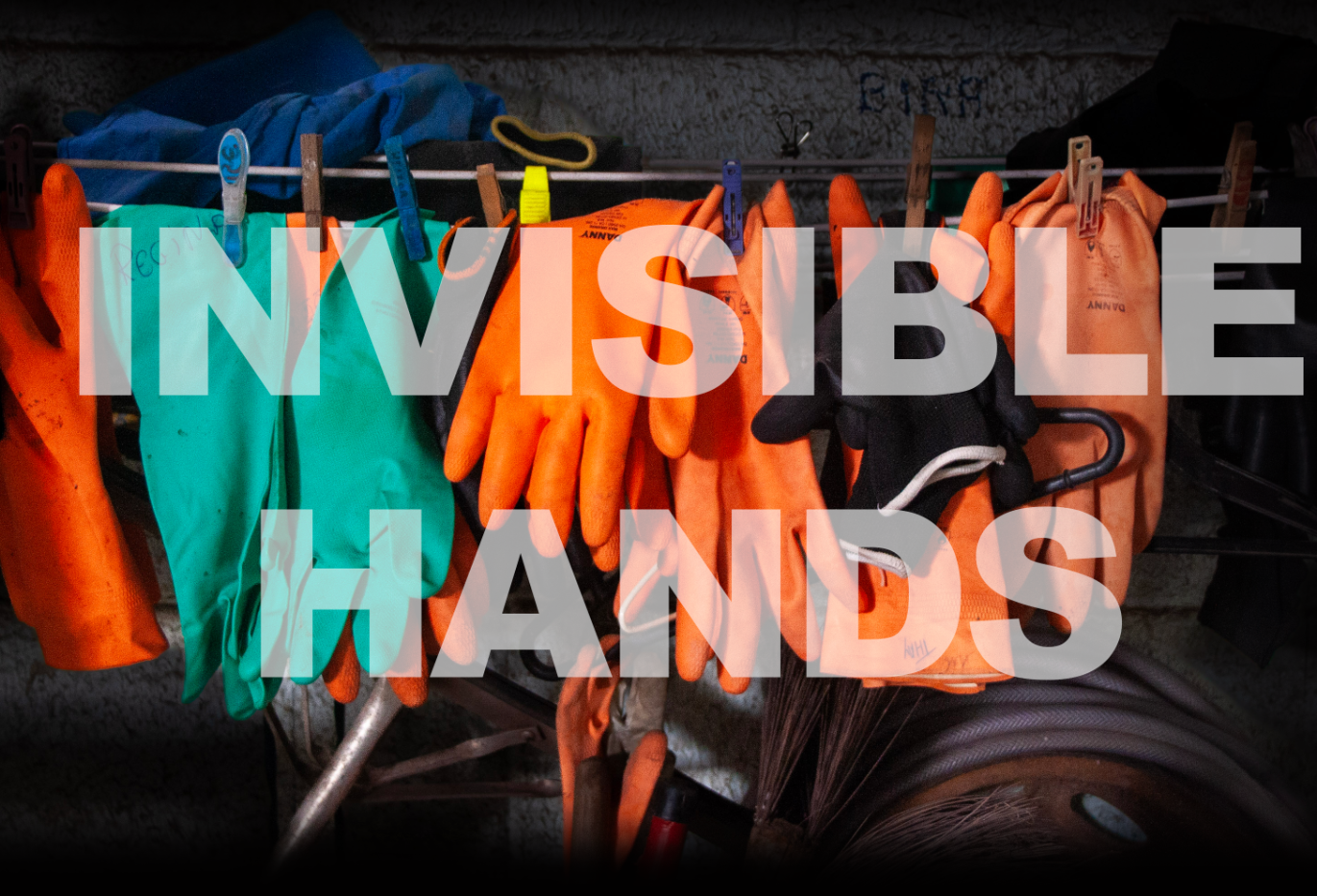
This project tells the true store of some Brazilian environmental heroes, and their efforts preventing tonnes of plastic and other materials from polluting our environment. They may not be enough to save the planet on their own but is about time for everyone to learn from them. It is time for people to recognise that behind those invisible hands are individuals fighting to ensure that future generations can still call Earth, our home
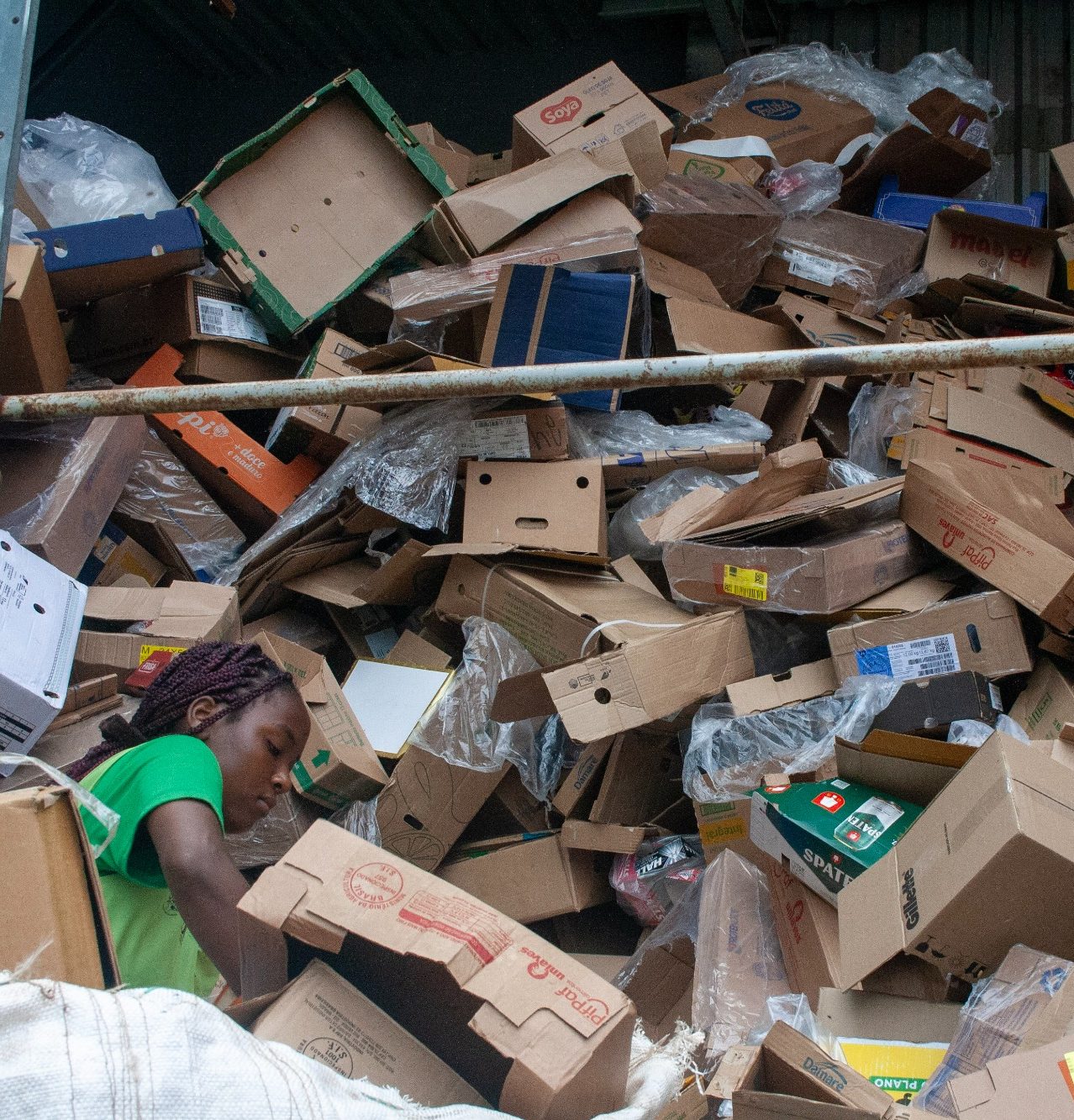
The paper hill: A member from a Brazilian Association, ABRASOL, collecting paper from a local partner. According to International Solid Waste Association, Brazil is recycling a shameful 4% out of the thousands of tons of waste.
a growing
challenge
According to some resources, reusing materials has been part of the human being history as old as the stone age. Some archaeological findings evidenced that glass and bronze were used to be re-melted and reused by the Romans and Byzantines (400 BC – 300 AD). Followed by other metals, paper and plastic in recent era. Since the middle age this concern became an urgently need, as per the raising amount of waste and its environmental impact and the spread of diseases.
Despite of all the efforts and campaigns, the waste issue has remained a major global concern. According to The Circularity Gap (2025), from the 106 billion of tons of the materials used globally, only 6.9% come from recycled waste. In addition, the report also highlighted that due to the speed of populational growth, the global consume of materials is generating more waste than the system and the environment can cope.
consumer
awareness
Findings indicate that consumer awareness is one of the main reasons why the numbers are so low. In several countries, this factor combined with lack of effective project management is translated to shame numbers such as Brazil. Although it is one of the top five countries that produce more waste worldwide, according to International Solid Waste Association, Brazil is recycling a shameful 4% out of the thousands of tons of waste. Travelling around Brazil, is easy to witness the lack or almost no incentive and investment to raise these figures.
The population is not aware of the importance or at least does not contribute actively to this matter. There is no separation made through the municipal wasting collection as well as no recycling bins. There is none or hardly any dedicated bins and recycling stations available countrywide, although this scenario change between states.
Some consumers mentioned that they used to separate it, however lost motivation after finding out the waste collector from the municipality mix everything with general waste.
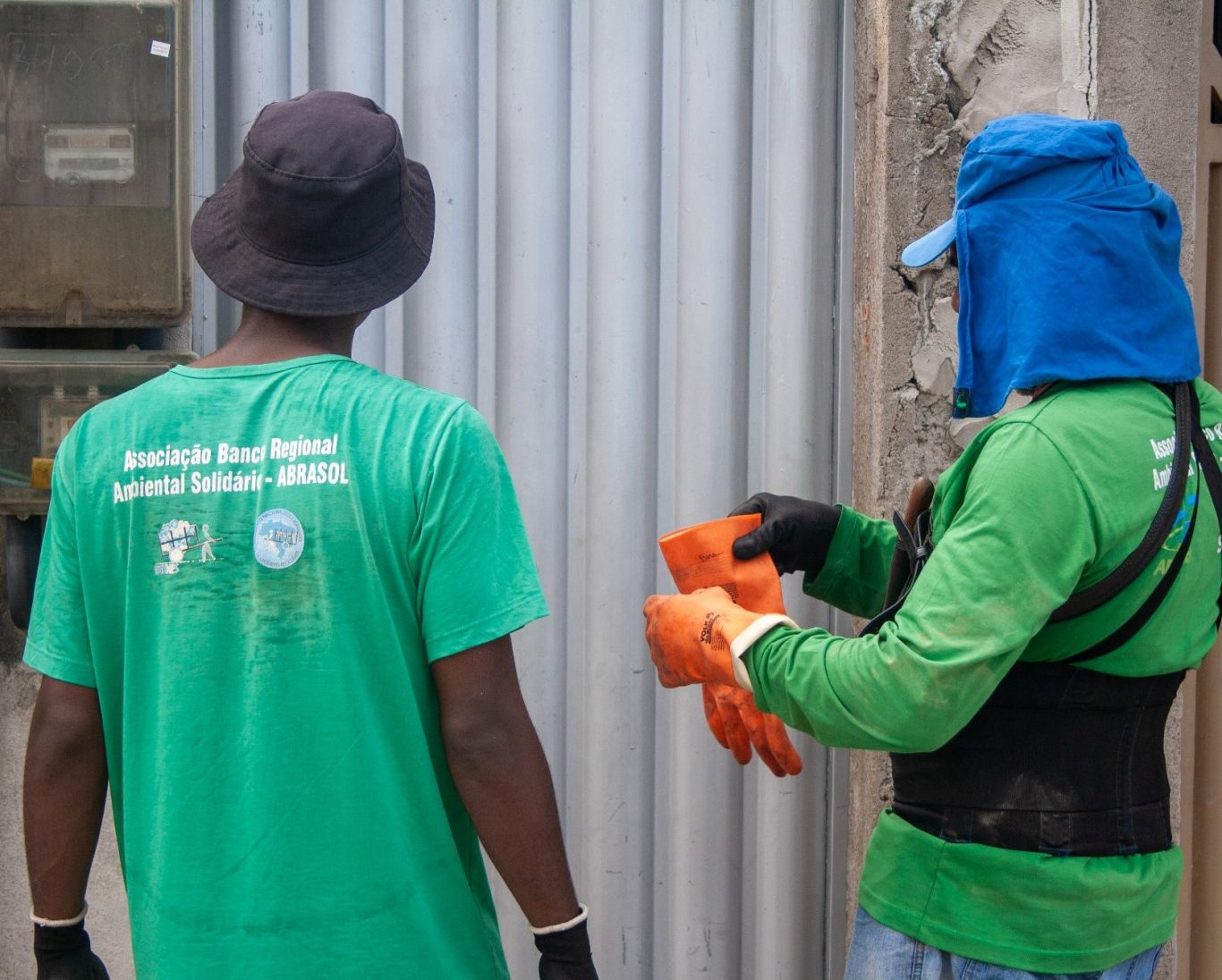
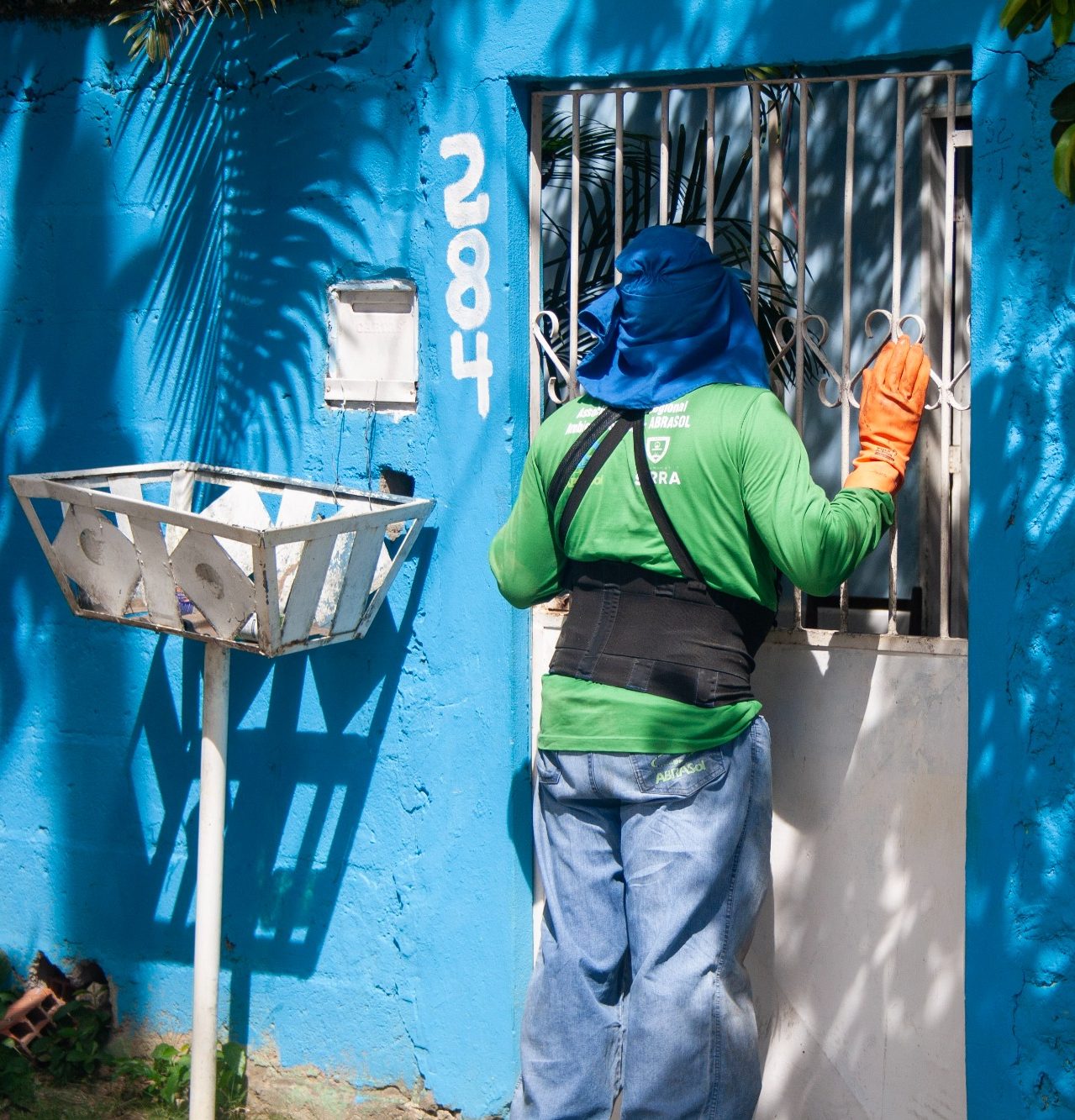
Door to door: In Brazil, local residents are visited regularly or upon request by associations such as ABRASOL to encourage the community to play their role in addressing this environmental challenge.
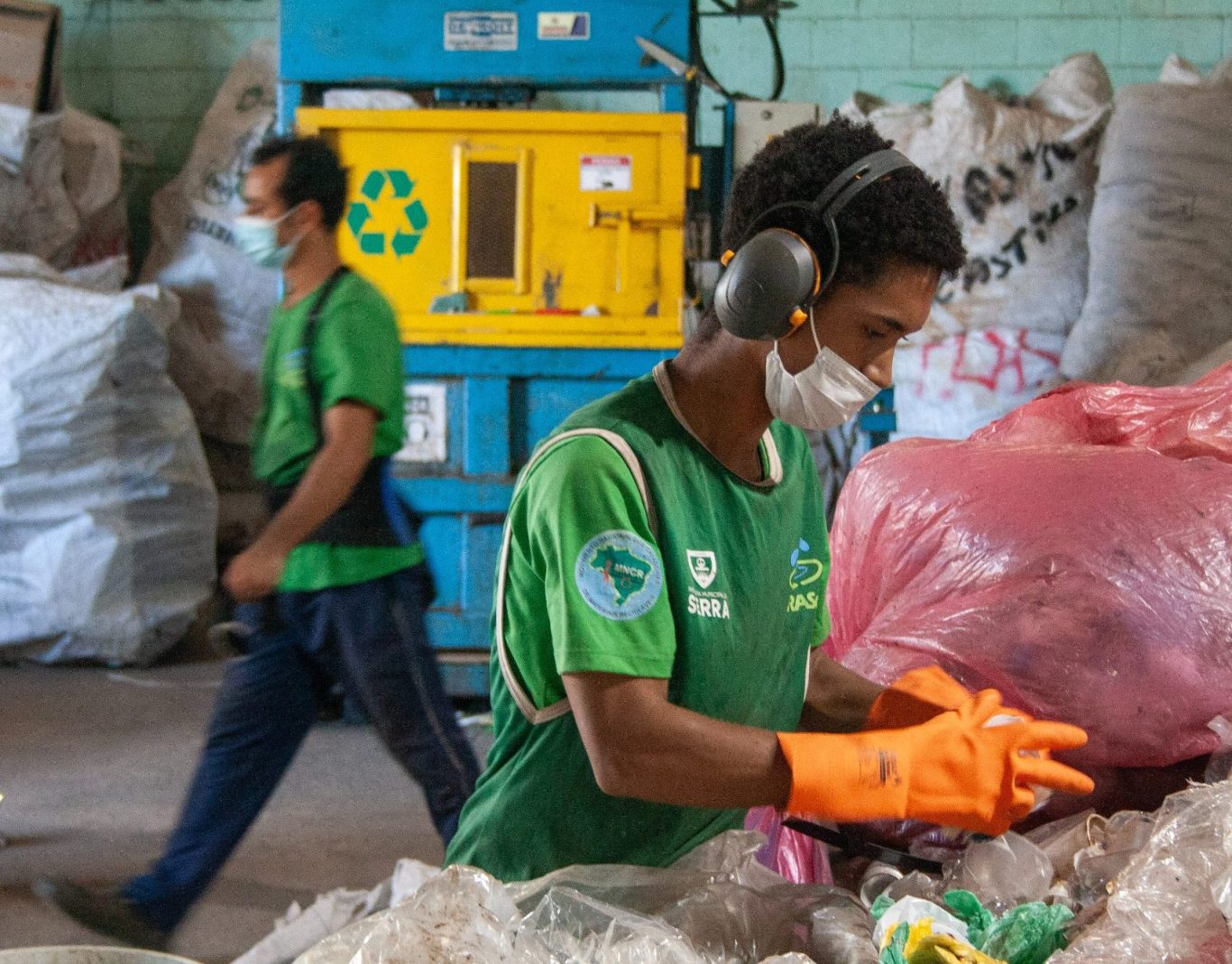
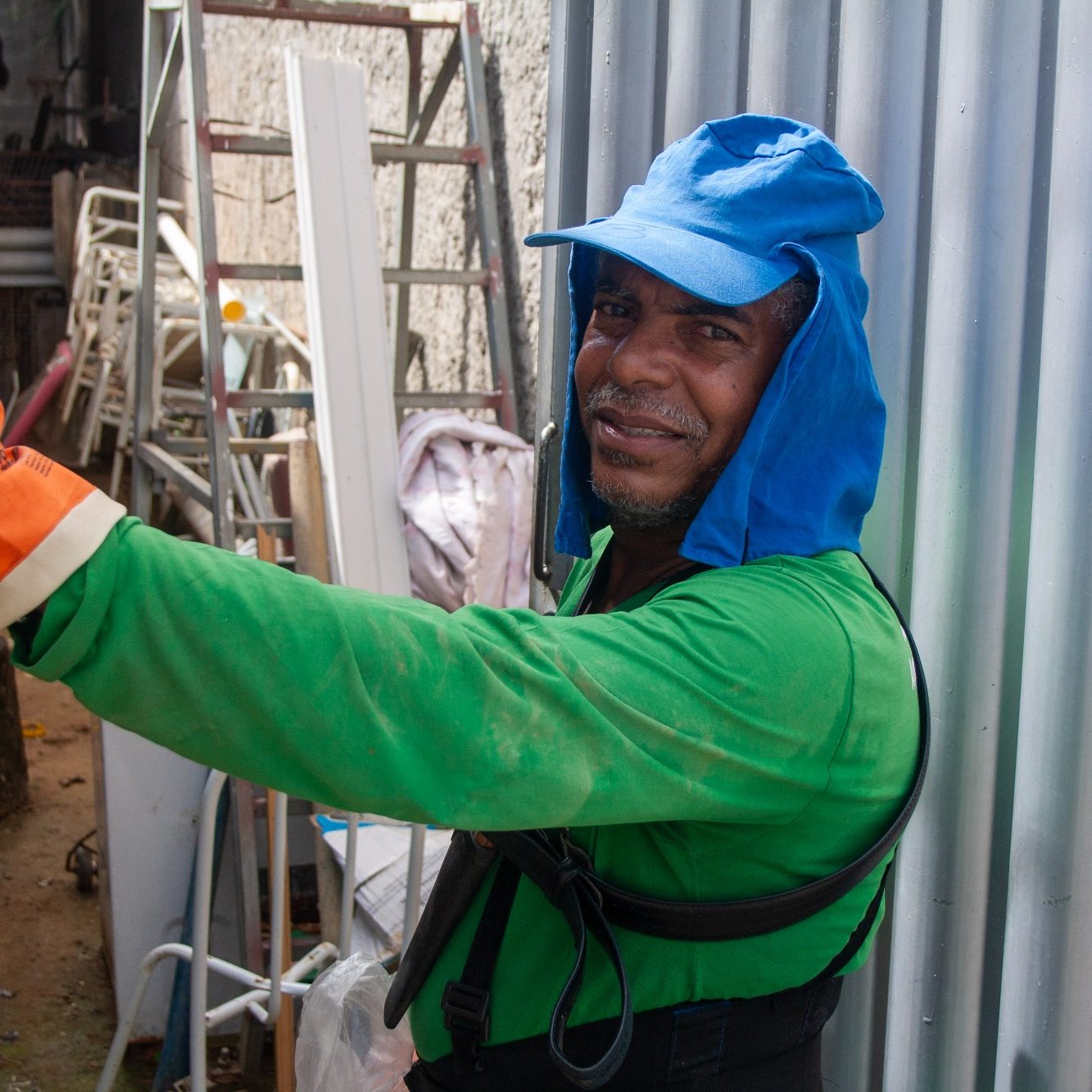
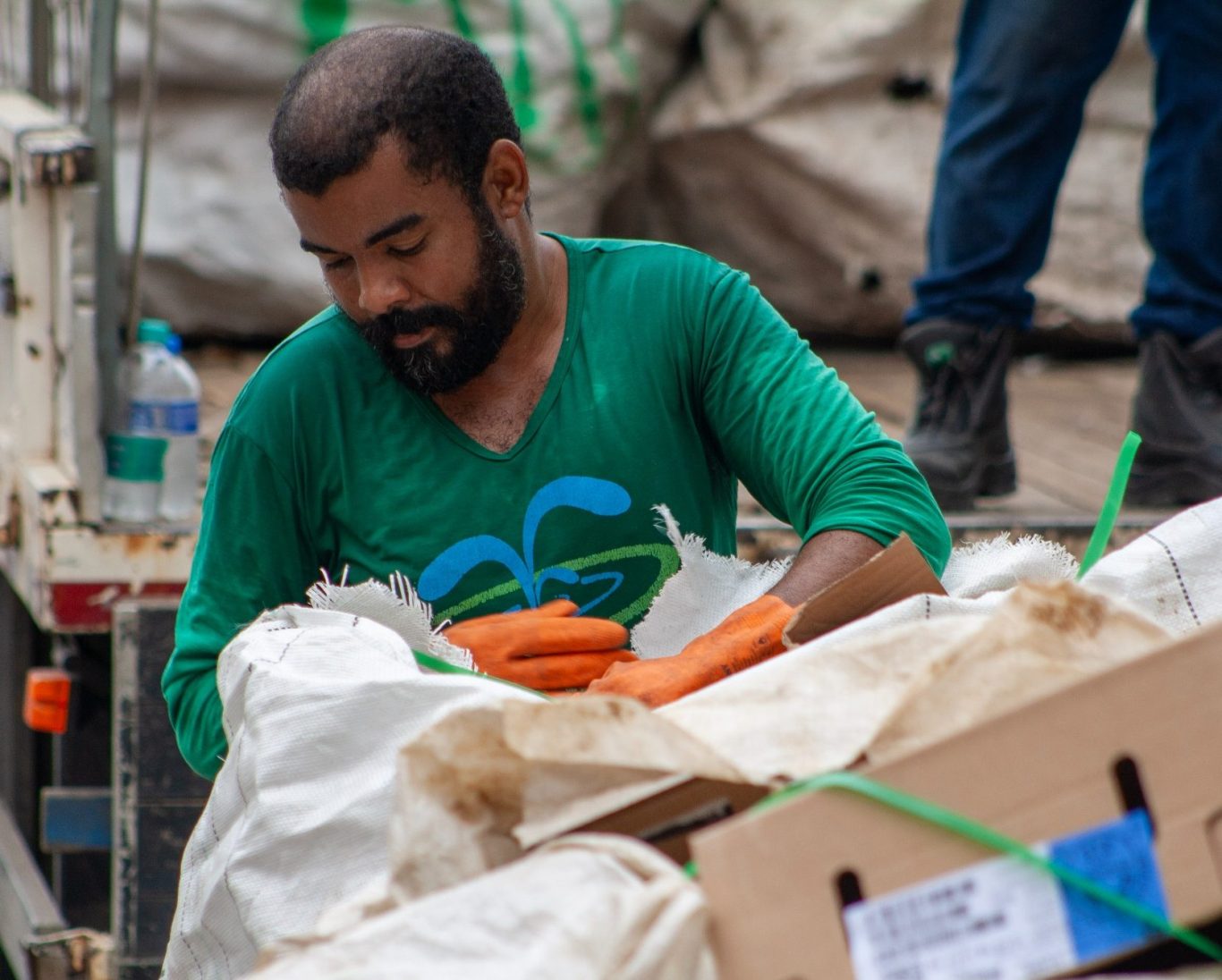
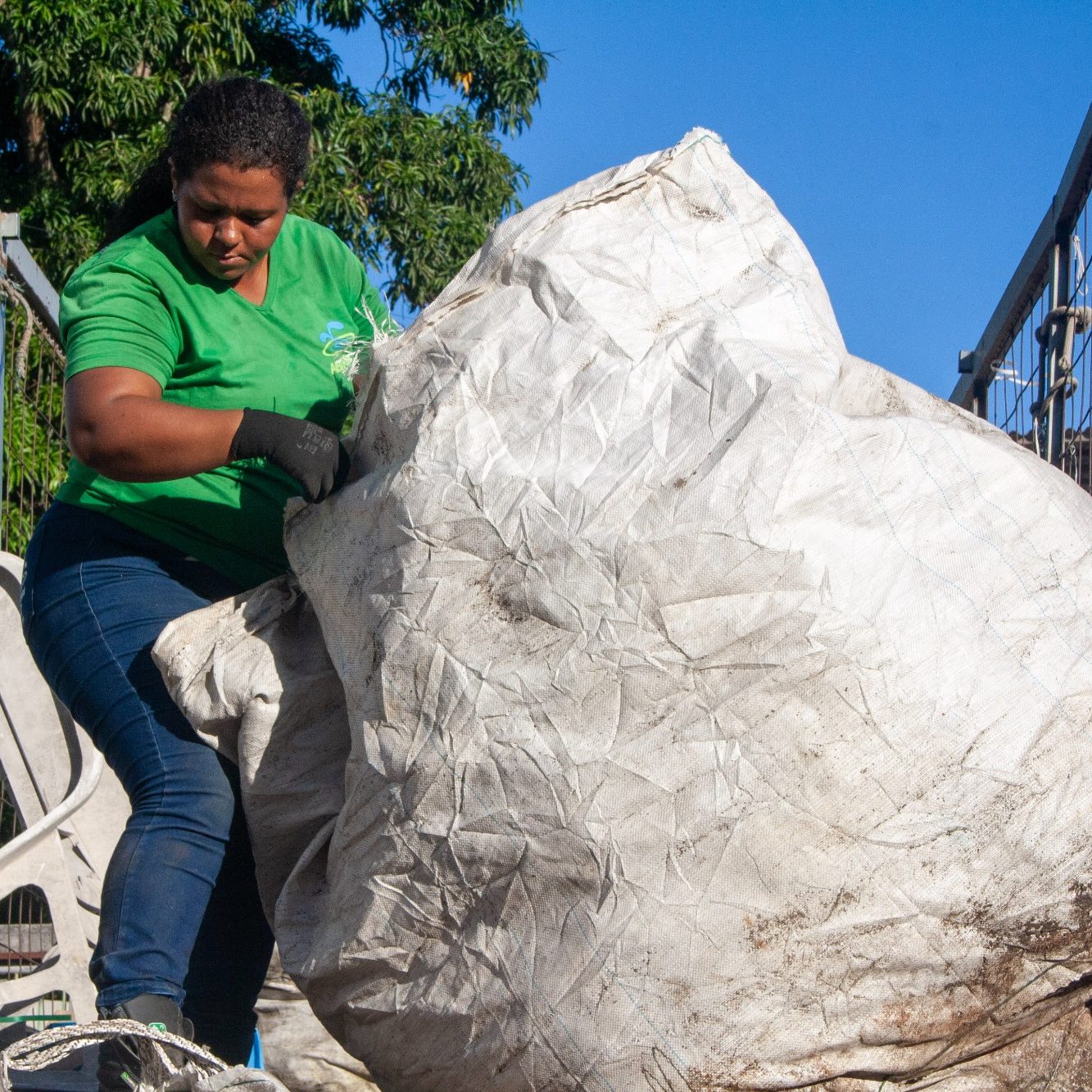
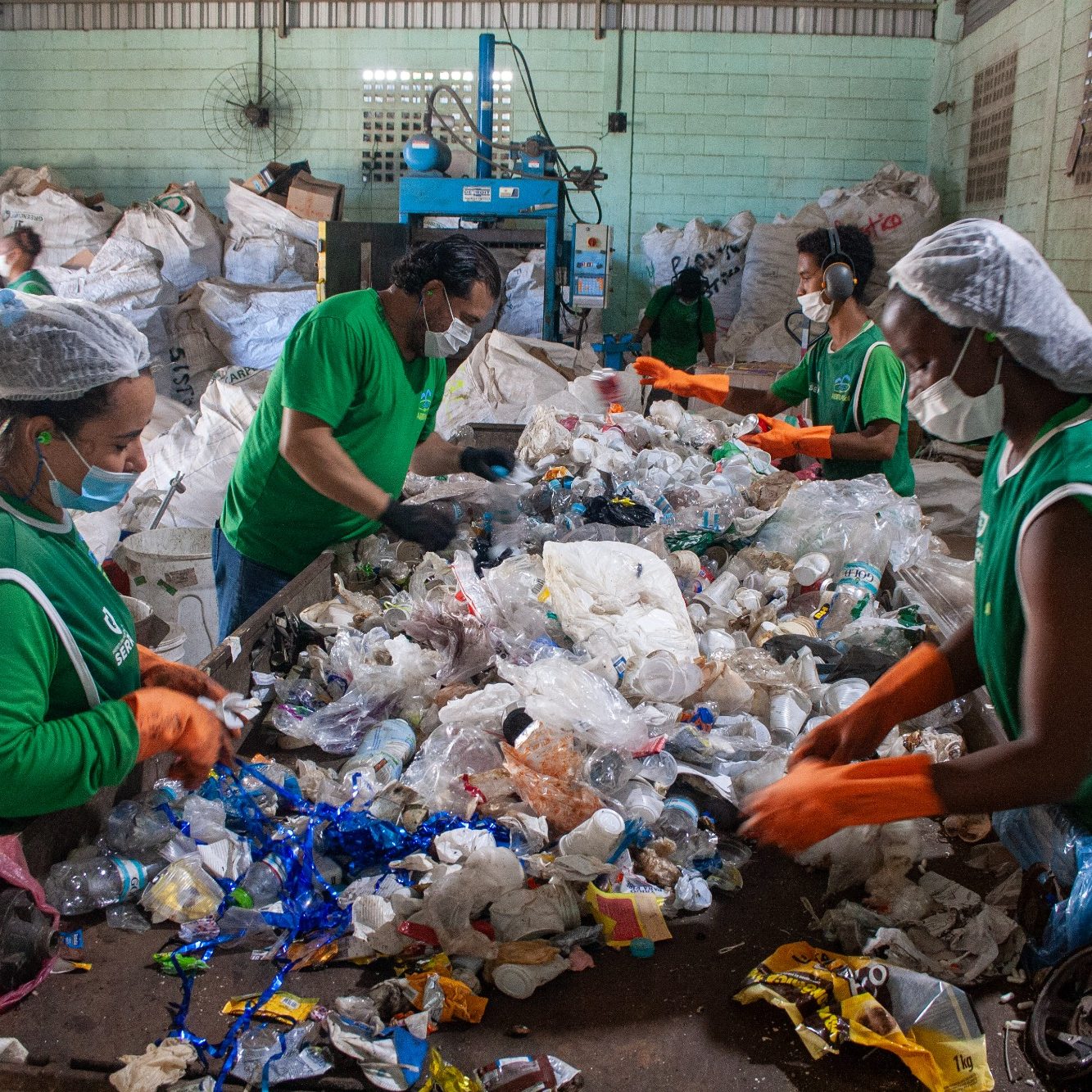
Keep Moving: Associates from ABRASOL perform several daily tasks, from collecting to classifying and separating materials.
still hope?
In contrast, Brazil has over 800,000 true heroes, responsible to collect around the 90% of the all the recycling materials, being definitely the most important part of the recycle chain: the waste pickers, or “Catadores” in Portuguese (MNCR*, 2024).
Regardless of their active and effective contribution to the environment, those “invisible heroes” are far from being recognized and respected as deserved. Poor working conditions, lack of protective material, expositions to harmful environments and insufficient wages, are the top challenges they face daily. Not mentioning the social discrimination due to their job.
The good news is that to overcome those challenges, Brazil has around 3097 waste pickers associations with more than 72 thousand formalised workers, says the 2025 Annual Recycling Report (2026), published by the “Instituto Caminhos Sustentaveis” – ICE. Those organizations play a key role providing social support, dignity and are constantly fighting for their rights.
*Movimento Nacional dos Catadores de Materiais Recicláveis (National Movement of Waste Pickers of Recyclable Materials)
abrasol
To better understand the life of some “Catadores”, I had the pleasure to spend three days in the Associação Banco Regional Ambiental Solidário - ABRASOL, in Jacareípe, Brazil, where I could observe, participate and better understand the importance of the associations such as ABRASOL for the waste pickers and community, and their contribution to the environment.
The ABRASOL started as a project by a group of residents who came together to take part in an environmental agent training in 2008. The training was offered by the Municipal Department of the Environment, part of several environment initiative they promote. In 2009, the local council launched the “Reflorescer” award, part of the “Florescer” project. The group presented an environmental intervention in the community, related to the Doctor Robson Stream, and achieved first place, competing against eight other groups.
Spreading the word: Since the beginning, ABRASOL has worked closely with the community, sharing their acquired knowledge about how important recycling waste is for our planet.
sharing is caring
Alvanete Eleotério, one of the group members and now Chairwoman of ABRASOL, reported that after the award, when they returned from a weekend at the Vale do Rio Doce Environmental Reserve in Sooretama, in the state of “Espirito Santo”. They realised that thanks to the training and the whole experience, they had gained new environmental awareness. From then on, they began gathering to decide what to do with the knowledge acquired. This initiative gave birth to the Environmental Solidarity Bank, which exchanged recyclable materials for a social currency (green coin) and the currency for food.
The project grew, becoming recognised and respected in the community, the municipality, and the state, even achieving third place in the Sustainable Attitude Award from TV Gazeta. This growth made it necessary to formalise the project, and the group was invited to take part in the Association and Cooperative course, which culminated in the registration of ABRASOL. Up to that point, the association only managed the Environmental Solidarity Bank, exchanging food for recyclable materials and assisting around 350 families.
"Before join the ABRASOL, I have participated in one volunteer activity." Bira
recycling ourselves
Over time, the volume of recyclable material became greater than the food collected through community work, donations, and social and governmental projects. Thus, ABRASOL needed to reinvent itself and now operates as a cooperative, or in other words, a big family. All the nearly 20 members work in various roles, such as waste collectors, administrative staff, and drivers.
Thanks to ABRASOL, the members secure essential income for their families and, in many cases, whether at ABRASOL or other associations, many families rely exclusively on the waste collectors' income.
Members join by referral, but always in the context of people who are unemployed, discriminated against, and who cannot easily find opportunities in the job market, as was Jonathan's case.
"The challenge of finding a job brought me here." Jonathan
by invitation
"When they arrive here, they receive support for opening a bank account, documentation, and the opportunity to take courses, as we are always involved with other associations and with the state and federal governments," explains Alvanete.
That was the case with Amina, who was invited to join ABRASOL five years ago and says this was her first experience as a waste collector, making it a continuous learning and personal growth journey.
A similar scenario happened with Celso, who was also referred by a friend.
Other circumstances brought more members, such as Bira, who joined the association after taking part in a voluntary action when ABRASOL was still just the Environmental Solidarity Bank project, or Luciara, who began facing hardship and was forced to seek an alternative to help support her household.
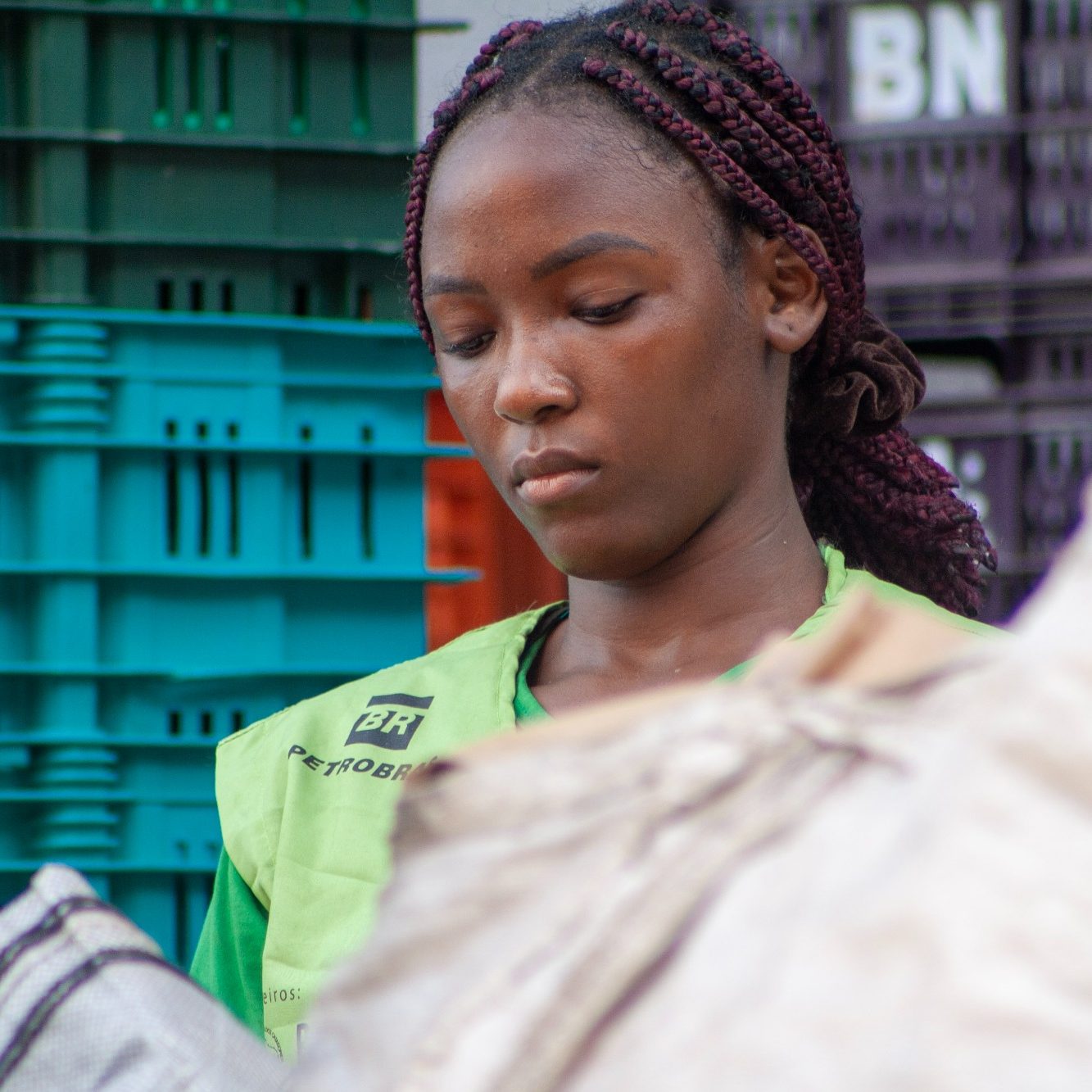
"This is my first experience as waste picker. I have learned a lot and continue to learn." Amina
the planet
needs us
When asked about their perception of the waste collector’s work, everyone unanimously recognises its importance, and most are aware that they form part of the 90% of recycled material in Brazil.
"It is very important work," emphasises Celso. For Jonathan, "it has great importance in society." In Bira's opinion, "the work of waste collectors is important for society and for our planet."
Luciara, besides agreeing on the importance of waste collectors, believes that it is a job that is not valued enough.
According to Amina, "The work of waste collectors in Brazil is very important, even though we encounter many difficulties due to lack of knowledge."
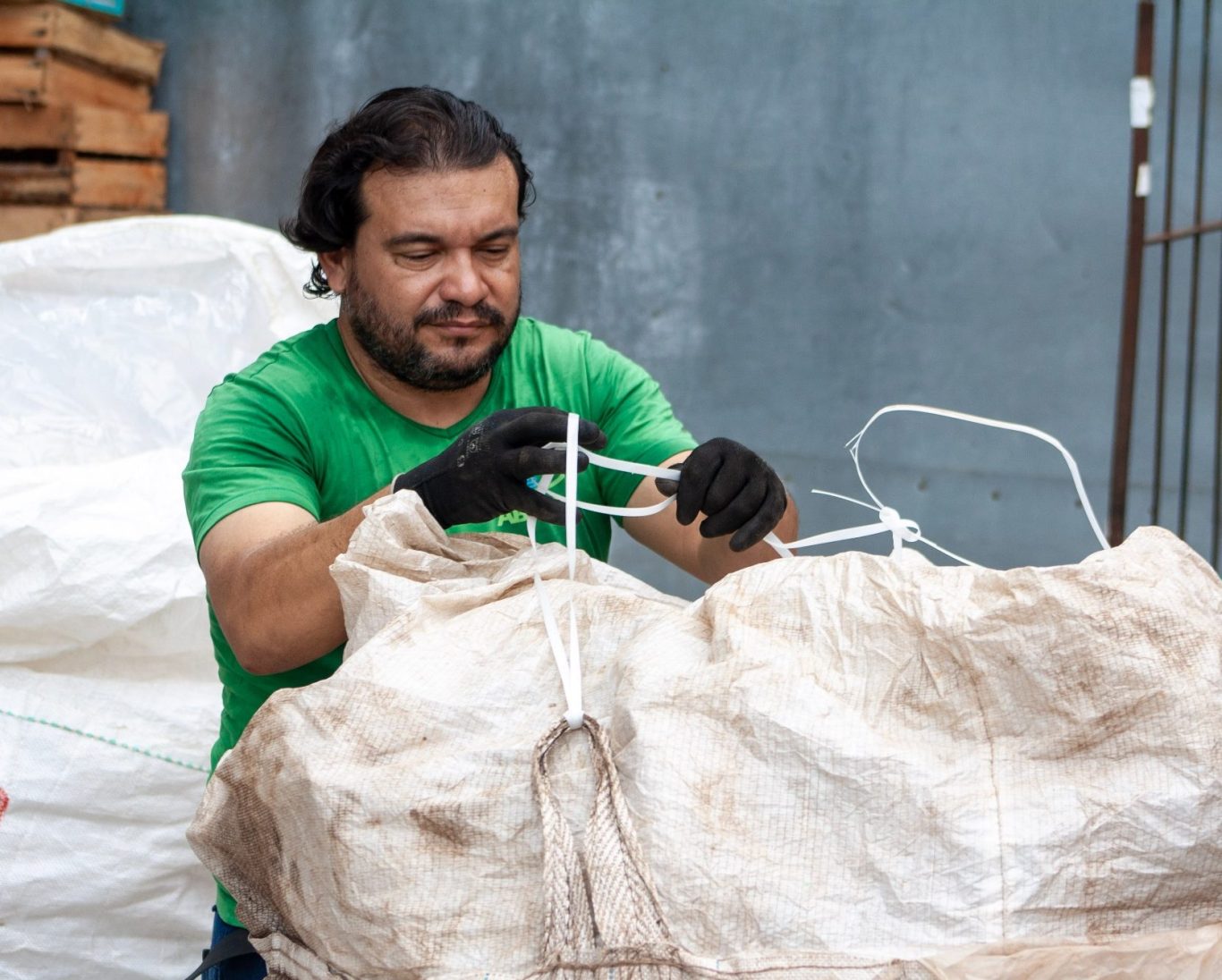
"Learning how to sort the materials was my biggest challenge." Celso
Overcoming
Challenges
There are many daily challenges faced by them, from learning to separate materials, which Celso says was one of his greatest challenges, to dealing with social issues and people's attitudes.
For Jonathan, the biggest challenge is making people understand the importance of separating recyclable material.
Luciara attributes one of the main challenges of the profession to a lack of recognition, besides the everyday difficulties.
Meanwhile, Bira considers the greatest challenge to be "continuing to work", and for Amina, "the biggest challenge of the profession is the lack of knowledge. Lack of knowledge leads to prejudice."
"Our work is very important, but is often undervalued. The lack of recognition is my biggest challenge." Luciara
facing the
unpleasant
"Although it is much less nowadays, there is still discrimination from society, which greatly undervalues our work. This undervaluing extends to a lack of respect for us as human beings, when people do not make proper separation," laments Alvanete, Chairwoman of ABRASOL.
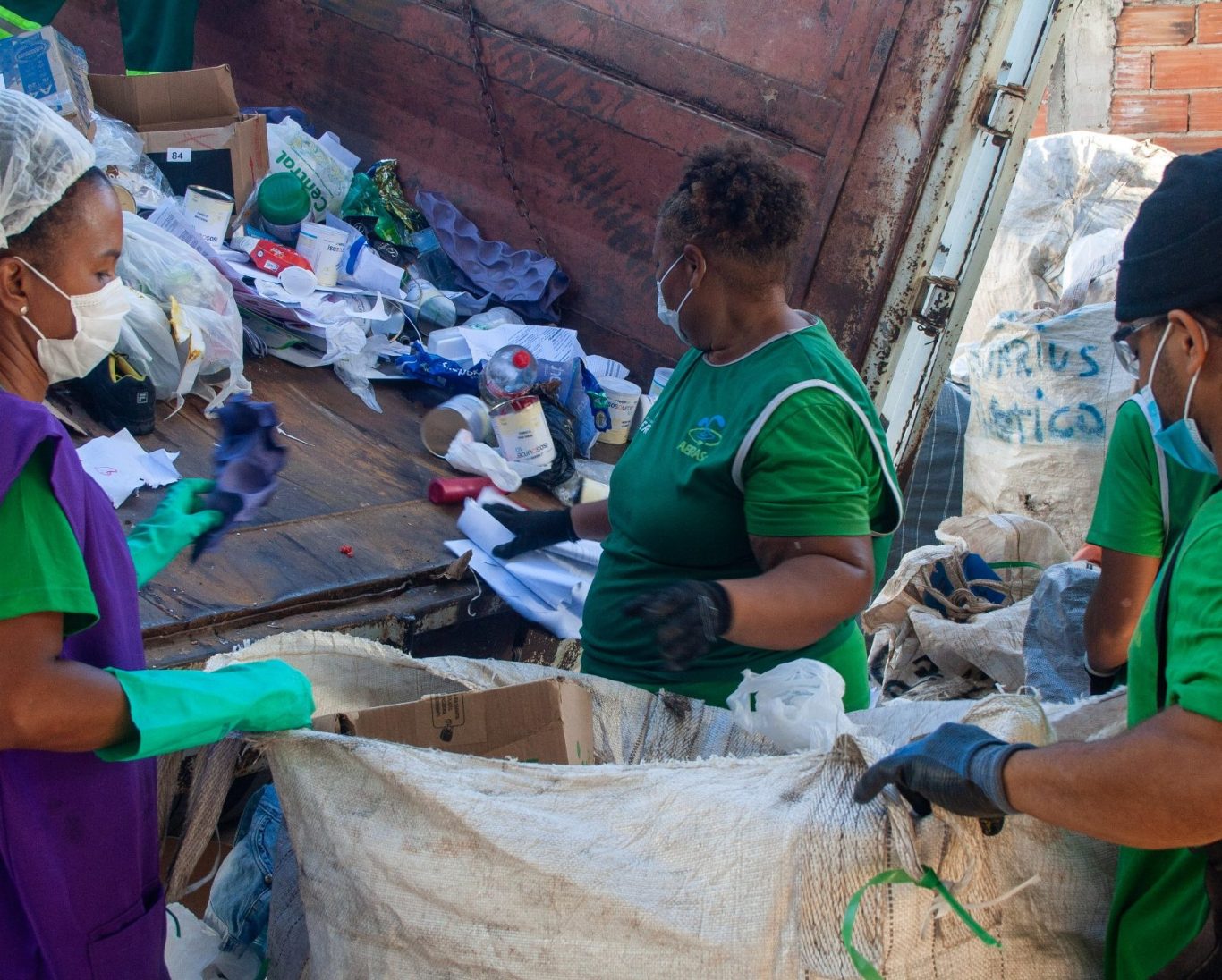
During sorting, the collectors, who also undertake this task, face unpleasant situations due to bad odours caused by organic remains in the materials, as well as absurdities such as faeces and even dead animals.
To tackle this and raise awareness in the population about the importance of recycling, ABRASOL also carries out sensitisation work and door-to-door waste collection.
Community residents are encouraged and guided to carry out correct segregation at home, and collection is done weekly or by appointment.
invisible
heroes
Participating in this experience with the ABRASOL family, witnessing first-hand the importance and challenges of such meaningful work, only proved how much we still need to evolve as human beings.
Respecting and valuing the work of the waste pickers goes far beyond a social or human issue. It is to recognise that they are the true heroes of this story.
Regardless the reason that led them to this profession, they are fighting for our planet, our home.
They are on the front line doing a task a that belongs to all of us.
In Brazil, this responsibility is not fairly shared. Their hands are the ones caring out the biggest part of it. Each waste picker’s hands are doing the work for approximately 700 residents
Their hands collect, their hands clean, their hands protect our environment, their hands make the difference. But unfortunately, for society, their hands remain invisible.